
Call us now :08045476828
 Send Inquiry
 Send Inquiry
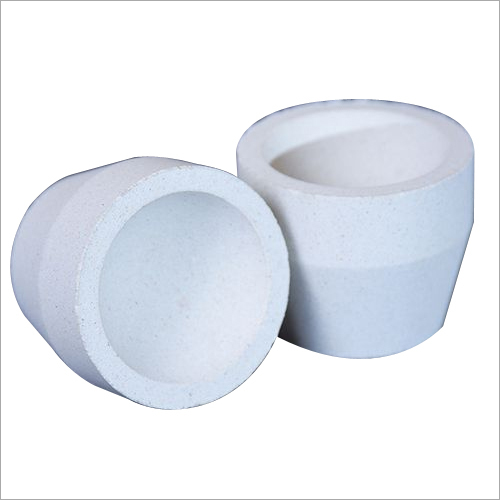
9C Magnesia Cupels
MOQ : 5 Metric Tons
9C Magnesia Cupels Specification
- Melting Point
- Over 1600C
- Hardness (%)
- Not specified (typically high for magnesia cupels)
- Purity(%)
- >98%
- Usage & Applications
- Precious metal assay, refining, and laboratory use
- Density
- 2.0 Gram per cubic centimeter(g/cm3)
- Application
- Gold and silver assaying, laboratory metal analysis
- Form
- Cupel
- Surface Finish
- Smooth, fine-grained
- Chemical Composition
- Magnesium Oxide (MgO) > 98%
- Water Absorption
- <5%
- Types of Refractories
- Basic Refractory
- Shape
- Shallow cup; hemispherical
- Porosity
- Controlled open porosity for efficient absorption
- Dimensional Stability
- Excellent at high temperatures
- Strength
- High, suitable for repeated heating cycles
- Specific Gravity
- 2.33.2
- Thermal Conductivity
- Low
- Color
- White
- Resistance to Attack
- Highly resistant to lead oxide (PbO)
- Compatibility
- Suitable for all standard assay furnaces
- Cupel Capacity
- Designed for efficient metal separation
- Shrinkage
- Minimal during firing
- Shelf Life
- Long when stored in dry conditions
- Manufacturing Process
- Pressed and sintered
- Refractoriness Under Load
- >1500C
- Storage Instructions
- Keep in a cool, dry place to avoid hydration
- Absorption Capacity
- Optimized for lead and litharge absorption
9C Magnesia Cupels Trade Information
- Minimum Order Quantity
- 5 Metric Tons
- Supply Ability
- 50 Metric Tons Per Month
- Delivery Time
- 45 Days
- Main Domestic Market
- All India
About 9C Magnesia Cupels
Other Detail :-
- Application : Industrial;,Commercial
- Color: Milky White
- Material: Magnesia
- Mgo Content: 99%
- Size: Customize
Features :-
- Portable
- Less Maintenance
- Durable
Technical details
|
Packaging Size |
160 Piece |
|
Color |
Milky White |
|
Material |
Magnesia |
|
Mgo Content |
99% |
|
Brand |
iMagCup |
|
Height |
33.5 mm |
|
Width |
51 mm |
|
Ridge |
5.5 mm |
|
Depth |
12 mm |
|
Weight Per Cupel |
126 g |
|
Box Weight |
20.9 Kg |
Superior Resistance to Chemical Attack
Engineered from high-purity magnesium oxide, 9C Magnesia Cupels are highly resistant to aggressive reagents like lead oxide (PbO), ensuring minimal degradation during assaying. Their basic refractory nature provides reliable performance under demanding chemical conditions, extending lifespan and preserving consistency in laboratory work.
Minimized Shrinkage & Optimal Absorption
Through a meticulous pressed and sintered manufacturing process, these cupels achieve low shrinkage and precise dimensional stability, even at extreme temperatures. Their controlled open porosity maximizes the absorption of lead and litharge, enhancing the separation of precious metals during refining and assay procedures.
Engineered for Laboratory and Industrial Needs
The design incorporates a shallow, hemispherical profile, ideal for efficient metal separation in both gold and silver assay applications. With low thermal conductivity and strong structural integrity, the cupels support repeated heating cycles in all standard assay furnaces, providing reliable results for Indian and international laboratories.
FAQs of 9C Magnesia Cupels:
Q: How should 9C Magnesia Cupels be stored to maintain their quality?
A: 9C Magnesia Cupels should be kept in a cool, dry place to prevent hydration. Proper storage conditions help preserve their structural integrity and ensure a long shelf life.Q: What benefits do these cupels offer during the metal separation process?
A: Their optimized absorption capacity and controlled porosity enable efficient uptake of lead and litharge, leading to precise separation of precious metals such as gold and silver in assaying and refining applications.Q: Where can 9C Magnesia Cupels be used?
A: These cupels are suitable for laboratory metal analysis, gold and silver assaying, and refining operations. They are compatible with all standard assay furnaces used in laboratories and industrial settings.Q: What is the manufacturing process used for 9C Magnesia Cupels?
A: The cupels are produced by pressing and sintering high-purity MgO powder. This process yields minimal shrinkage during firing and ensures a fine-grained, smooth surface with reliable dimensional stability at high temperatures.Q: When should 9C Magnesia Cupels be replaced during routine use?
A: Cupels should be replaced after each assay cycle or when significant absorption or physical changes are observed. Their high strength and refractory properties allow for repeated use, but periodic inspection ensures reliability and accuracy.Q: How do 9C Magnesia Cupels withstand extreme heat and chemical exposure?
A: With a refractoriness under load exceeding 1500C, over 98% MgO content, and high resistance to PbO, these cupels maintain their structure under stressful thermal and chemical environments encountered during assaying.Q: What makes 9C Magnesia Cupels advantageous over other types?
A: Their high purity, dimensional stability, minimal shrinkage, and efficient absorption characteristics ensure accurate results, durability, and cost-effectiveness, making them the preferred choice for precious metal assay professionals.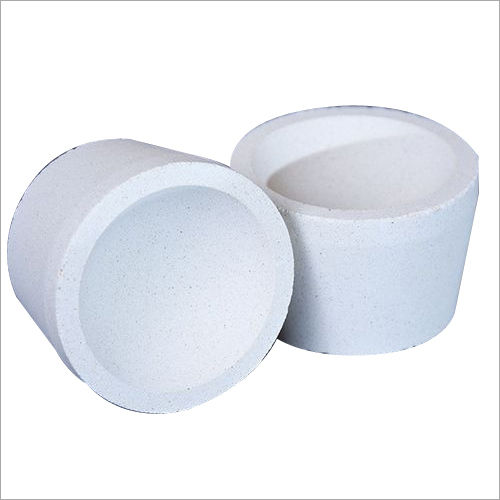
Tell us about your requirement

Price:
Quantity
Select Unit
- 50
- 100
- 200
- 250
- 500
- 1000+
Additional detail
Mobile number
Email

More Products in Magnesia Cupels Category
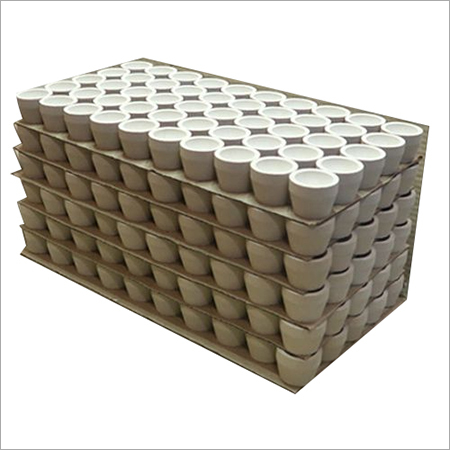
Magnesia Refractory Bullion Cupels
Minimum Order Quantity : 5 Metric Tons
Chemical Composition : MgO (Magnesia) >97%, trace SiO2, CaO
Surface Finish : Smooth interior, porous body
Water Absorption : High for absorption of lead oxide
Porosity : Controlled, high absorption
Thermal Conductivity : Low
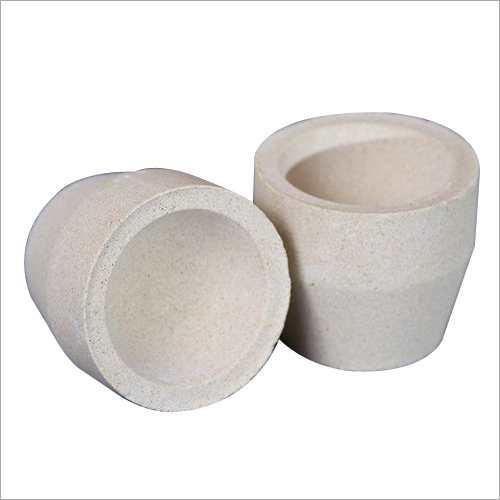
7AS Magnesia Cupels
Minimum Order Quantity : 5 Metric Tons
Chemical Composition : MgO > 95%
Surface Finish : Smooth, dense surface
Water Absorption : Very low, less than 0.5%
Porosity : Optimized, high open porosity for lead absorption
Thermal Conductivity : Very low
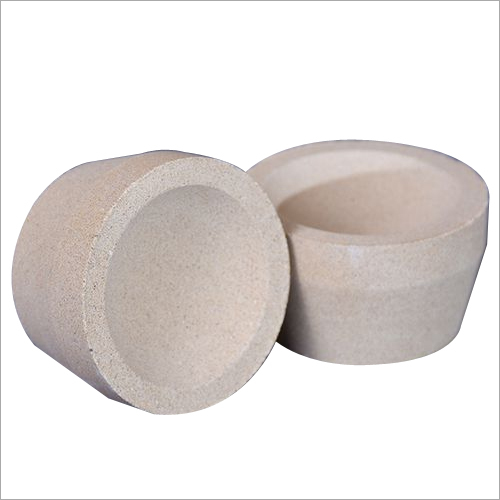
9 Magnesia Cupels
Minimum Order Quantity : 5 Metric Tons
Chemical Composition : Magnesia (MgO), with minor CaO and SiO
Surface Finish : Smooth
Water Absorption : 15%
Porosity : Optimized for Absorption of Lead Oxide
Thermal Conductivity : Low
7B Magnesia Cupels
Minimum Order Quantity : 5 Metric Tons
Chemical Composition : MgO (Magnesium Oxide) 95%+, with balance CaO and trace components
Surface Finish : Smooth textured exterior, porous internal matrix
Water Absorption : High, aids in lead absorption
Porosity : Controlled/microporous to absorb lead oxide efficiently
Thermal Conductivity : Low

 Send Inquiry

252/28, N.M Arcade, 1st Floor, Opp. ARRS Multiplex, Meyyanur By- Pass Road,Salem - 636009, Tamil Nadu, India

Mr Prasad Shah
(Proprietor)
Mobile :08045476828
 Send Inquiry
 Send SMS
Developed and Managed by Infocom Network Private Limited.
