
Call us now :08045476828
 Send Inquiry
 Send Inquiry
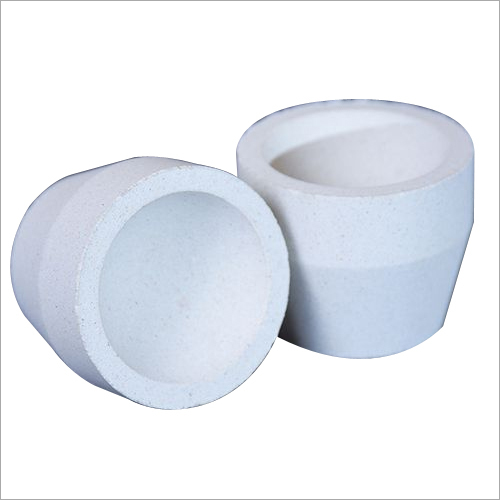
Size 8 Magnesia Cupels
MOQ : 5 Metric Tons
Size 8 Magnesia Cupels Specification
- Surface Finish
- Smooth outer surface, porous interior
- Purity(%)
- 98%
- Form
- Solid, pre-formed
- Melting Point
- >2800C
- Usage & Applications
- Gold, silver, and platinum group metals analysis
- Water Absorption
- High, suitable for cupellation process
- Application
- Laboratory use for precious metal assay and analysis
- Density
- 2.0 Gram per cubic centimeter(g/cm3)
- Hardness (%)
- Approximately 70-80%
- Chemical Composition
- MgO main content
- Types of Refractories
- Basic Refractory
- Shape
- Round cup/bowl
- Porosity
- High (to absorb litharge effectively)
- Dimensional Stability
- Excellent, no deformation at high temperature
- Strength
- High compressive strength, designed to withstand rapid heating
- Specific Gravity
- 2.3-2.5 g/cm
- Thermal Conductivity
- Low
- Color
- Greyish white
- Bulk Packaging
- Packed in cartons or wooden boxes
- Capacity
- Suitable for 25-30g lead assay
- Lead Absorption
- Excellent, absorbs litharge during assay
- Fire Resistance
- Very high
- Operating Temperature
- Up to 1100C continuous
- Shelf Life
- Stable, if kept dry
- Cupel Size
- Size 8 (approx. 40 mm diameter x 25 mm height)
- Resistance
- Thermal shock resistance
- Odor
- Odorless
- Weight per Piece
- Approx. 55-65 grams
Size 8 Magnesia Cupels Trade Information
- Minimum Order Quantity
- 5 Metric Tons
- Supply Ability
- 50 Metric Tons Per Month
- Delivery Time
- 45 Days
- Main Domestic Market
- All India
About Size 8 Magnesia Cupels
Other Detail :-
- Application : Industrial;,Commercial
- Color: Milky White
- Material: Magnesia
- Mgo Content: 99%
- Size: Customize
Features :-
- Portable
- Less Maintenance
- Durable
Technical details.
|
Packaging Size |
240 Piece |
|
Color |
Milky White |
|
Material |
Magnesia |
|
Mgo Content |
99% |
|
Brand |
iMagCup |
|
Height |
27.1 mm |
|
Width |
44.3 mm |
|
Ridge |
9 mm |
|
Depth |
8.5 mm |
|
Weight Per Cupel |
72.5 g |
|
Lead Absorption Capacity |
65-70% |
|
Box Weight |
18.2 Kg |
Superior Thermal Performance for Cupellation
Size 8 Magnesia Cupels offer remarkable thermal stability, designed to operate seamlessly up to 1100C without deforming, thanks to their high MgO content and basic refractory properties. Their durable structure ensures excellent dimensional stability and compressive strength, essential for demanding laboratory environments. Their high melting point (>2800C) and fire resistance provide peace of mind during intensive precious metals analysis procedures, delivering reliable performance assay after assay.
Optimized Design for Precious Metal Assays
Each magnesia cupel is expertly shaped as a round cup with a smooth exterior and porous interior, tailored for efficient litharge absorption during cupellation processes. Size 8 cupels (40 mm diameter x 25 mm height) support the analysis of 25-30g lead samples with high water absorption capacity and low thermal conductivity. Their stable, odorless, and greyish-white solid form withstands rapid heating, ideal for routine use in gold, silver, and platinum assays.
FAQs of Size 8 Magnesia Cupels:
Q: How are Size 8 Magnesia Cupels used in the cupellation process?
A: Size 8 Magnesia Cupels are used to separate precious metals from lead and other base metals during fire assay analysis. A sample combined with lead is placed in the cupel and heated to around 1100C, where the cupels porous structure absorbs litharge (lead oxide), leaving behind purified gold, silver, or platinum group metals.Q: What benefits does a Size 8 Magnesia Cupel offer over other types?
A: These cupels deliver excellent lead absorption due to their high porosity and MgO purity (98%). Their thermal shock resistance, dimensional stability, and fire resistance ensure consistent, reliable performance even at elevated temperatures, minimizing risks of cracking or deformation during rapid heating cycles.Q: When should I replace a magnesia cupel during precious metal analysis?
A: Replace a magnesia cupel after each assay run, as its absorption capacity diminishes and structural integrity may be compromised once it has absorbed litharge. Proper disposal and replacement ensure accurate results in all subsequent assays.Q: Where should Size 8 Magnesia Cupels be stored to maximize shelf life?
A: Store Size 8 magnesia cupels in a dry environment, ideally inside cartons or wooden boxes as supplied. Keeping them away from moisture preserves their structural and absorption qualities for a stable, long shelf life.Q: What process does the cupel undergo during a gold or silver assay?
A: The cupel undergoes cupellationa high-temperature process where the lead and other base metals oxidize, and the porous magnesia absorbs the resulting litharge, isolating precious metals in their elemental form for further analysis.Q: How does the cupels chemical composition support its high-temperature performance?
A: With MgO as its main component, the cupel boasts a melting point above 2800C, high compressive strength, and low thermal conductivity. This composition imparts the dimensional stability and resistance needed to endure repeated heating during metal assays.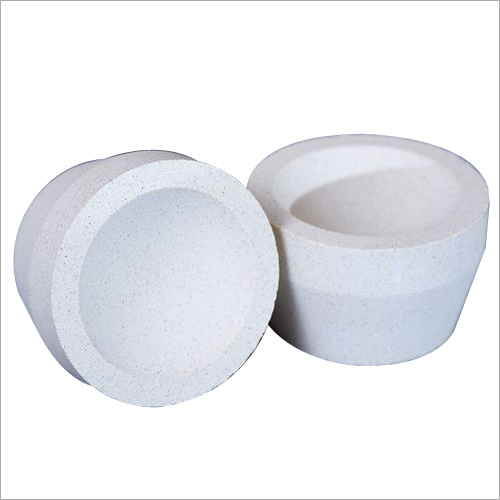
Tell us about your requirement

Price:
Quantity
Select Unit
- 50
- 100
- 200
- 250
- 500
- 1000+
Additional detail
Mobile number
Email

More Products in Magnesia Cupels Category
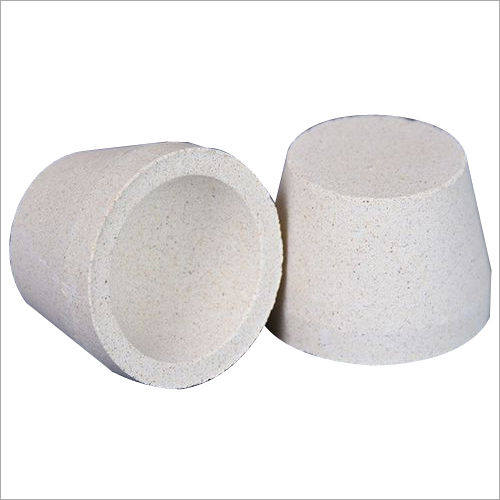
7AL Magnesia Cupels
Minimum Order Quantity : 5 Metric Tons
Usage & Applications : Assaying and refining of gold, silver, and other precious metals
Melting Point : Above 1550C
Porosity : High, controlled for absorption
Form : Solid
Purity(%) : >97%
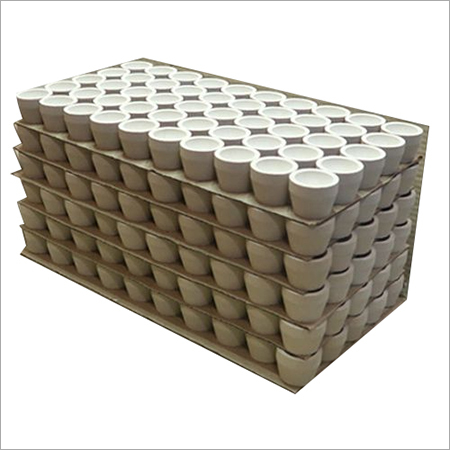
Magnesia Refractory Bullion Cupels
Minimum Order Quantity : 5 Metric Tons
Usage & Applications : Gold and Silver Assaying, Fire Assay, Analytical Laboratory
Melting Point : >2000C
Porosity : Controlled, high absorption
Form : Solid Cupel
Purity(%) : >97% MgO
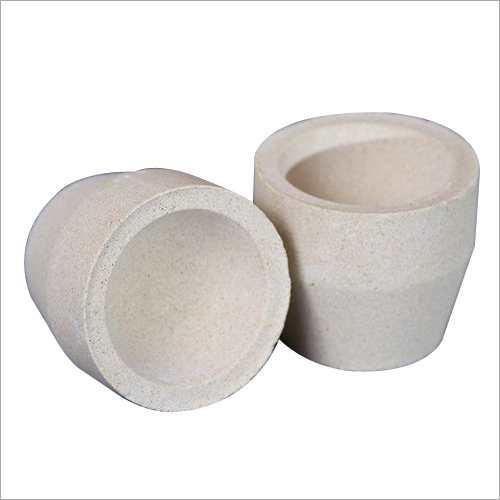
7AS Magnesia Cupels
Minimum Order Quantity : 5 Metric Tons
Usage & Applications : Fire assay laboratories, gold and silver refining, analysis of precious metals
Melting Point : Above 1500C
Porosity : Optimized, high open porosity for lead absorption
Form : Solid, cupshaped
Purity(%) : Above 95%
7B Magnesia Cupels
Minimum Order Quantity : 5 Metric Tons
Usage & Applications : Mainly for fire assay of precious metals, supporting laboratories, refineries, and educational institutes
Melting Point : Above 1600C
Porosity : Controlled/microporous to absorb lead oxide efficiently
Form : Solid, circular disc with central depression
Purity(%) : Typically 95% 98% MgO

 Send Inquiry

252/28, N.M Arcade, 1st Floor, Opp. ARRS Multiplex, Meyyanur By- Pass Road,Salem - 636009, Tamil Nadu, India

Mr Prasad Shah
(Proprietor)
Mobile :08045476828
 Send Inquiry
 Send SMS
Developed and Managed by Infocom Network Private Limited.
